
 Jamie Lopez
Understanding Habit Stacking for Personal Development
Habit Stacking Lifestyle Trends for Personal Growth – Embarking on a journey of personal growth often starts with small, consistent steps. Habit stacking is a powerful yet elegantly simple strategy that leverages our existing daily routines to seamlessly integrate new, beneficial habits. It’s about building upon what you already do, making the process feel less like a chore and more like a natural extension of your day. By understanding its core principles, you can unlock a potent tool for positive transformation.
The Core Principles of Habit Stacking
At its heart, habit stacking is a method of linking a new habit you want to adopt with a habit you already perform consistently. The fundamental idea is to use an established habit as a trigger for a new one. This creates a predictable chain reaction, making it much easier to remember and execute the new behavior. The principle relies on the power of cues and rewards. The existing habit acts as the cue, and the successful completion of the new habit provides a small, satisfying reward, reinforcing the connection.
Examples of Simple Habit Stacks
Getting started with habit stacking is incredibly straightforward. The key is to choose an existing, non-negotiable habit as your anchor. Here are a few examples to get your imagination flowing:
- After I brush my teeth in the morning, I will drink a glass of water.
- After I finish my first cup of coffee, I will meditate for five minutes.
- After I get home from work, I will change into my workout clothes.
- After I put my dinner plate in the dishwasher, I will read one page of a book.
- After I turn off my alarm in the morning, I will do ten squats.
These simple stacks take advantage of moments already built into your day, requiring minimal additional effort to initiate.
Leveraging Existing Routines to Build New Ones
The brilliance of habit stacking lies in its ability to piggyback on established neural pathways. Our brains are wired to follow patterns. When you associate a new behavior with an existing one, you’re essentially creating a shortcut for your brain. Instead of trying to remember a completely new task out of the blue, you’re simply adding a step to a familiar sequence. This reduces the mental load and the likelihood of forgetting, making the new habit feel less like a conscious effort and more like an automatic continuation of what you were already doing.
Embrace the power of Habit Stacking Lifestyle Trends for Personal Growth by integrating small, achievable actions into your day. Discover innovative ways to enhance your well-being, even for busy individuals, by exploring Fitness-Free Wellness Lifestyle Trends for Busy People. These mindful shifts beautifully complement your journey of continuous personal growth through smart habit stacking.
Psychological Benefits of Associating New Habits with Established Ones
The psychological advantages of habit stacking are significant. Firstly, it taps into the principle of “habit momentum.” Once a habit is established, it carries its own energy. By attaching a new habit to this momentum, you’re giving it a running start. Secondly, it reduces decision fatigue. You don’t have to decide *when* to do the new habit; the cue is already there. This frees up mental energy for other important tasks. Finally, the consistent success of completing these stacked habits builds confidence and a sense of accomplishment, which further fuels motivation for personal growth.
Identifying Lifestyle Trends Supporting Habit Stacking
The modern landscape is rich with lifestyle trends that not only align with personal growth but also provide fertile ground for implementing habit stacking. These trends often emphasize intentionality, self-care, and a more mindful approach to daily living, making them natural partners for building positive new routines.
Current Lifestyle Trends for Personal Growth and Habit Formation
Several contemporary lifestyle movements are perfectly suited for integrating habit stacking. These trends encourage a conscious effort to improve one’s life, whether through mental, physical, or emotional well-being. Here are a few prominent examples:
- Mindfulness and Meditation: Focusing on the present moment and cultivating inner peace.
- Digital Detox and Intentional Tech Use: Reducing screen time and being more deliberate about technology consumption.
- Intentional Living and Minimalism: Living with purpose, prioritizing what truly matters, and decluttering both physical and mental space.
- Wellness and Self-Care: Prioritizing activities that promote physical and mental health.
- Continuous Learning and Skill Development: A commitment to ongoing education and acquiring new abilities.
These trends often involve adopting new practices, which is precisely where habit stacking shines.
Integrating Trends like Mindfulness, Digital Detox, and Intentional Living with Habit Stacking
The synergy between these lifestyle trends and habit stacking is powerful. For instance, someone practicing digital detox might stack a new habit of reading a physical book for 15 minutes immediately after they put their phone away for the night. Similarly, a person aiming for more mindfulness could stack a 2-minute breathing exercise after their morning coffee. Intentional living can be bolstered by stacking a task related to personal goals, like planning your week, after you’ve completed your morning hygiene routine.
Embracing habit stacking is a powerful pathway to personal growth, transforming your daily life into a series of intentional actions. By linking new habits to existing routines, you unlock consistent progress and cultivate a more fulfilling existence, proving that small, stacked changes lead to significant personal development.
Comparing Lifestyle Trends for Habit Stacking Suitability, Habit Stacking Lifestyle Trends for Personal Growth
While many trends are conducive to habit stacking, some offer more immediate opportunities. Trends that involve distinct, repeatable actions are often easier to stack. For example, a physical activity like stretching is easier to stack than a more abstract concept like “being more positive.” However, even abstract goals can be broken down into actionable habits. The key is to identify the specific, tangible behaviors within each trend that can be linked to existing routines.
Categorizing Trends by Focus
To better understand how to integrate these trends, we can categorize them based on their primary focus:
- Health and Physical Well-being: This includes trends like fitness challenges, mindful eating, and prioritizing sleep. Habit stacks could involve doing a set of exercises after waking up or preparing a healthy snack after returning from work.
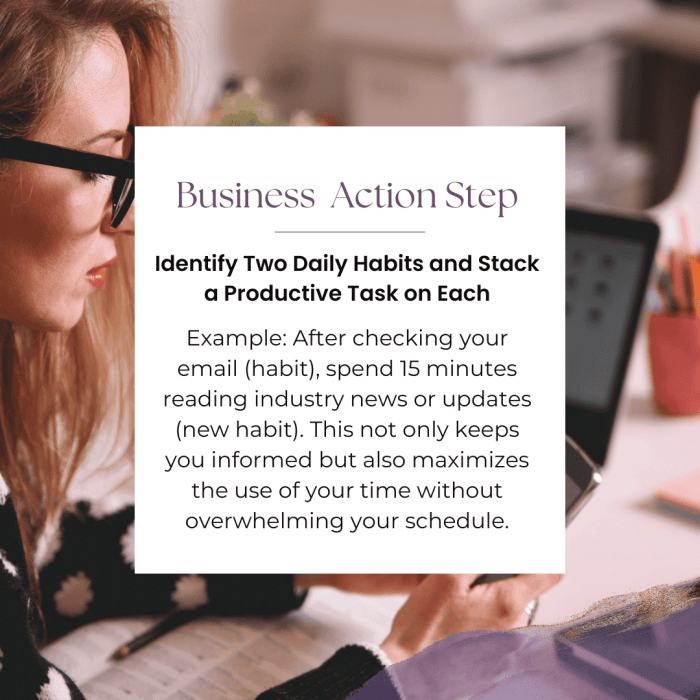
- Productivity and Time Management: Trends like goal setting, time blocking, and focused work sessions fall here. Stacks might include reviewing your daily to-do list after your morning commute or dedicating 25 minutes to a focused task after lunch.
- Mental and Emotional Well-being: This encompasses mindfulness, gratitude practices, journaling, and digital detox. Habit stacks could involve writing down three things you’re grateful for after dinner or practicing deep breathing exercises before bed.
- Personal Development and Learning: This category covers acquiring new skills, reading for knowledge, and creative pursuits. Stacks might include practicing a new language for 10 minutes after your evening meal or listening to an educational podcast during your commute.
Designing Effective Habit Stacking Routines
Creating a habit stacking routine that sticks is a thoughtful process, not a random act. It involves understanding your current life, identifying opportunities, and planning strategically. By following a structured approach, you can design a system that seamlessly integrates new habits into your day, paving the way for lasting personal growth.
A Step-by-Step Process for Creating Your Own Habit Stacks
Designing effective habit stacks involves a clear, sequential process. It’s about being intentional and practical:
- Identify a Goal: What personal growth area do you want to focus on? Be specific.
- Break it Down: What small, actionable habit can contribute to that goal?
- Find Your Anchor: What existing, non-negotiable daily habit can you use as a trigger?
- Create the Stack: Formulate a clear “After [existing habit], I will [new habit]” statement.
- Test and Refine: Implement the stack and observe its effectiveness. Adjust as needed.
A Template for Outlining a Personal Habit Stacking Plan
To formalize your habit stacking efforts, a simple template can be invaluable. This provides a clear overview and helps in tracking progress:
My Habit Stacking Plan
| Personal Growth Goal | New Habit to Implement | Anchor Habit (Existing Routine) | Habit Stack Statement | Notes/Adjustments |
|---|---|---|---|---|
| [e.g., Improve physical fitness] | [e.g., Do 10 push-ups] | [e.g., After I brush my teeth] | After I brush my teeth, I will do 10 push-ups. | [e.g., Started with 5, increased to 10 after a week] |
| [e.g., Reduce screen time before bed] | [e.g., Read for 15 minutes] | [e.g., After I put my phone on the charger] | After I put my phone on the charger, I will read for 15 minutes. | [e.g., Initially struggled to focus, set a timer] |
| [e.g., Learn a new language] | [e.g., Complete one Duolingo lesson] | [e.g., After I finish my first cup of coffee] | After I finish my first cup of coffee, I will complete one Duolingo lesson. | [e.g., Found it easier to do during breakfast instead] |
Identifying Potential “Anchor” Habits
Anchor habits are the bedrock of your habit stacks. They should be activities you perform daily without fail, almost on autopilot. Think about your most consistent routines:
- Waking up and getting out of bed
- Brushing your teeth (morning and night)
- Making your first cup of coffee or tea
- Eating a meal (breakfast, lunch, dinner)
- Commuting to or from work
- Washing your hands
- Turning off lights at night
- Getting into bed
The more established and frequent the anchor habit, the more reliable it will be as a trigger for your new behavior.
Strategies for Overcoming Common Obstacles
Even with the best intentions, challenges can arise. Here are common obstacles and how to address them:
- Forgetting the New Habit: Make your habit stack statement visible. Use visual cues (e.g., a sticky note). Ensure the anchor habit is truly consistent.
- Lack of Motivation: Start smaller. Make the new habit ridiculously easy to achieve initially. Remind yourself of the “why” behind your goal.
- Time Constraints: Re-evaluate the duration of your new habit. Can it be shortened temporarily? Can you use a more efficient anchor habit?
- Feeling Overwhelmed: Don’t try to stack too many new habits at once. Focus on one or two until they feel natural.
- Disruptions to Routine: Have a backup plan for when your anchor habit is missed (e.g., “If I miss my morning coffee, I will do my new habit after I arrive at my desk”).
A Framework for Tracking Progress and Adjusting Habit Stacks
Continuous monitoring is crucial for long-term success. A simple framework involves:
- Daily Check-in: Briefly note whether you completed your stacked habit. A simple checkmark on a calendar or in a journal works well.
- Weekly Review: Look at your progress for the week. What went well? What were the challenges?
- Monthly Assessment: Evaluate the effectiveness of your habit stack. Is it still serving your goal? Does it need adjustment?
- Adaptation: Based on your review, tweak the habit duration, the anchor, or even the new habit itself. Life changes, and your habit stacks should be flexible enough to adapt.
Practical Applications and Case Studies
The theory of habit stacking comes alive when we see it in action. Real-world examples and case studies demonstrate its versatility and effectiveness across different life domains and personal growth objectives. These instances offer tangible proof of how this strategy can foster significant, positive change.
Real-World Scenarios of Successful Habit Stacking
Countless individuals have transformed their lives through the simple act of stacking habits. Consider Sarah, who struggled with consistent exercise. She implemented a stack: “After I put my breakfast dishes in the sink, I will do 20 jumping jacks.” This small addition, linked to an unavoidable daily task, led to her consistently incorporating movement into her mornings, eventually building up to more robust workouts. Or consider Mark, who wanted to read more. His stack was: “After I turn off my bedside lamp, I will read one page of a book.” This minimal commitment made reading a nightly ritual, gradually increasing his reading volume and enjoyment.
Specific Habit Stacks and Their Outcomes
The specificity of the habit stack directly influences its outcome. For instance:
- Goal: Improved Sleep Hygiene. Habit Stack: “After I finish brushing my teeth at night, I will immediately put my phone on silent and place it on my nightstand.” Outcome: Reduced late-night scrolling, leading to falling asleep faster and waking up feeling more rested.
- Goal: Enhanced Productivity at Work. Habit Stack: “After I arrive at my desk, I will spend 5 minutes reviewing my top three priorities for the day.” Outcome: Increased focus and a clearer sense of direction, leading to more efficient workdays.
- Goal: Better Financial Management. Habit Stack: “After I get my paycheck, I will immediately transfer 10% into my savings account.” Outcome: Consistent saving without conscious effort, leading to significant financial growth over time.
Integrating Habit Stacking into Different Life Domains
Habit stacking is not confined to one area of life; it’s a universally applicable tool:
- Work: Stacking a quick stretch break after finishing a significant task, or reviewing emails for 5 minutes after your first meeting.
- Family: Stacking a shared gratitude practice at the dinner table, or having children stack putting their toys away after playtime.
- Fitness: Stacking a hydration goal by drinking a glass of water immediately after your workout, or preparing your gym bag the night before after brushing your teeth.
- Personal Development: Stacking a 10-minute language learning session after your evening meal, or practicing a musical instrument for 15 minutes after getting home.
Habit Stacks for Specific Personal Growth Goals
Here are examples tailored to common growth aspirations:
- Learning a New Skill (e.g., coding): “After I finish my lunch, I will spend 20 minutes working through a coding tutorial.”
- Improving Sleep Quality: “After I finish my dinner, I will do 10 minutes of gentle stretching.”
- Reducing Stress: “After I arrive home from work, I will take 5 deep breaths before entering the house.”
- Cultivating Creativity: “After I pour my morning coffee, I will write down one creative idea in my notebook.”
Transferable Lessons from Case Studies
The common threads in successful habit stacking stories highlight key principles:
- Start Small: The new habit should be so easy you can’t say no.
- Consistency is Key: Link to an unbreakable daily routine.
- Be Specific: Clearly define the “after” and the “what.”
- Be Patient: It takes time for new habits to become automatic.
- Adaptability: Be willing to adjust your stack if it’s not working.
The Role of Technology and Tools in Habit Stacking: Habit Stacking Lifestyle Trends For Personal Growth
In our increasingly digital world, technology offers a wealth of resources to support and enhance habit stacking. From simple reminder apps to sophisticated wearable devices, these tools can provide the structure, accountability, and feedback needed to make new routines stick.
Digital Tools and Applications for Habit Stacking Support
A variety of digital tools can be leveraged to facilitate habit stacking. These often provide a centralized place to plan, track, and remind you of your stacked habits:
- Habit Tracking Apps: Applications like Streaks, Habitica, or Productive allow you to create custom habits, set reminders, and visually track your progress with streaks and completion rates. They often offer gamified elements to boost motivation.
- Calendar Applications: Using your existing calendar (Google Calendar, Outlook) to schedule your stacked habits can be effective. Set recurring alarms or time blocks for your new routines.
- To-Do List Apps: Apps like Todoist or Microsoft To Do can be used to list your habit stacks and check them off as completed, providing a sense of accomplishment.
- Note-Taking Apps: Simple apps like Evernote or Apple Notes can serve as a digital journal for outlining your habit stacks and reflecting on your progress.
Using Wearable Technology for Tracking and Reinforcement
Wearable devices, such as smartwatches and fitness trackers, offer a unique advantage for habit stacking, especially for physical or health-related goals:
- Activity Tracking: Devices can automatically track activities like walking, running, or even sleep, serving as a natural anchor or confirmation of a stacked habit. For example, a fitness tracker can confirm you completed your post-work walk, reinforcing the habit stack.
- Reminders and Haptic Feedback: Smartwatches can provide subtle vibrations or notifications at specific times, reminding you to perform your stacked habit. This can be particularly useful for habits that require immediate action after a certain event.
- Biometric Data: Some wearables collect data like heart rate, which can be used to gauge the intensity of a stacked exercise or to monitor stress levels, providing insights into the effectiveness of well-being habits.
Using Smart Home Devices for Automation and Reminders
The integration of smart home technology can further streamline habit stacking:
- Automated Lights: Smart lights can be programmed to turn on at a specific time, acting as a visual cue for a stacked habit, such as reading or journaling.
- Smart Speakers: Devices like Amazon Echo or Google Home can be set up with custom routines. For instance, you could say, “Hey Google, good morning,” and have it trigger a series of actions, including a reminder to drink water or do a short meditation.
- Smart Plugs: These can be used to control other devices. For example, a smart plug could turn on a lamp at a specific time, signaling it’s time to start a reading habit.
Pros and Cons of Using Technology for Habit Tracking
Technology can be a powerful ally, but it’s important to consider both its advantages and disadvantages:
| Pros | Cons |
|---|---|
| Increased Accountability: Reminders and tracking features keep you on course. | Potential for Distraction: Over-reliance on apps can become another source of distraction. |
| Visual Progress Tracking: Streaks and data can be highly motivating. | Technical Glitches: Apps or devices can malfunction, disrupting routines. |
| Automation: Smart devices can reduce the manual effort of remembering. | Cost: Some advanced tools and devices can be expensive. |
| Accessibility: Many tools are readily available on smartphones. | Privacy Concerns: Sharing personal data with apps requires trust. |
| Gamification: Can make habit building more engaging and fun. | Over-Complication: Some tools might be too complex for simple habit stacks. |
A Guide to Selecting Appropriate Technological Aids
Choosing the right tools depends on your personal preferences and the nature of your habits:
- Start Simple: If you’re new to habit stacking, begin with a basic habit tracker app or your phone’s calendar.
- Match the Tool to the Habit: For physical habits, wearables are excellent. For learning or productivity, dedicated apps or calendars might be better.
- Consider Your Existing Ecosystem: If you already use Apple Health or Google Fit, look for apps that integrate with these platforms.
- Prioritize User Experience: Choose tools that are intuitive and enjoyable to use. A complex interface can be a barrier.
- Don’t Overdo It: Resist the urge to use every gadget and app. Select one or two that genuinely enhance your habit stacking efforts without becoming a burden.
Sustaining Habit Stacks for Long-Term Personal Growth
Building new habits is just the first step; the real magic happens when these habits become ingrained and contribute to sustained personal growth. Maintaining motivation, adapting to life’s changes, and embracing flexibility are key to ensuring your habit stacks become a permanent, positive force in your life.
Strategies for Maintaining Motivation and Consistency
Keeping your momentum going is crucial for long-term success. Here are some effective strategies:
- Celebrate Small Wins: Acknowledge and reward yourself for completing your stacked habits, even if it’s just a mental pat on the back or a few minutes of guilt-free relaxation.
- Visualize Your Success: Regularly picture yourself achieving your personal growth goals as a result of your consistent habits.
- Find an Accountability Partner: Share your habit stacking goals with a friend or family member who can check in with you and offer encouragement.
- Connect to Your “Why”: Remind yourself of the deeper reasons behind your habit stacks. What positive impact will they have on your life?
- Make it Enjoyable: Whenever possible, add an element of pleasure to your new habits or the process of completing them.
Adapting Habit Stacks as Circumstances and Goals Evolve
Life is dynamic, and your habit stacks should be too. As your goals shift or your circumstances change, be prepared to adapt:
- Regular Review: Schedule monthly or quarterly reviews of your habit stacks. Are they still aligned with your current priorities?
- Flexibility in Anchors: If your primary anchor habit becomes inconsistent (e.g., a change in work schedule), identify a new, reliable anchor.
- Adjusting Habit Intensity: If a habit feels too demanding, scale it back. If it feels too easy, gradually increase its duration or complexity.
- Introducing New Habits: As existing stacks become automatic, consider adding new ones, always linking them to established routines.
- Removing Outdated Habits: If a habit no longer serves your goals, don’t be afraid to remove it to make space for new ones.
Techniques for Preventing Habit Decay and Relapses
Even the most dedicated individuals can experience dips. Here’s how to guard against habit decay:
- The “Never Miss Twice” Rule: If you miss a day of your stacked habit, make it your absolute priority to complete it the next day. Don’t let one missed day turn into two, then three.
- Pre-Plan for Disruptions: Anticipate potential challenges (travel, illness, busy periods) and create contingency plans for your habit stacks.
- Focus on the Process, Not Just Perfection: Understand that occasional lapses are normal. The goal is consistent progress, not flawless execution.
- Revisit Your “Why”: When motivation wanes, reconnect with the core reasons you started building these habits in the first place.
- Simplify if Necessary: If you’re struggling, temporarily simplify the habit to make it easier to maintain until you regain momentum.
The Importance of Self-Compassion and Flexibility
Your habit stacking journey is a personal one, and it’s essential to approach it with kindness and understanding. Self-compassion means acknowledging that you are human and will have off days. Instead of criticizing yourself for a missed habit, offer yourself understanding and encouragement to get back on track. Flexibility allows you to adapt without feeling like a failure. If a particular stack isn’t working, or if life throws an unexpected curveball, being able to adjust your approach without abandoning the entire system is crucial for long-term success.
Best Practices for Long-Term Success of Habit Stacking Routines
To ensure your habit stacks become a lasting part of your lifestyle, consider these best practices:
- Keep it Simple to Start: Begin with one or two very small, easy-to-implement habit stacks.
- Be Patient and Persistent: Habits take time to form. Don’t get discouraged if you don’t see results immediately.
- Regularly Review and Refine: Your habit stacks should evolve with you.
- Focus on the Integration: Ensure your new habits feel like a natural extension of your existing routines.
- Embrace Imperfection: Progress, not perfection, is the goal.
- Celebrate Milestones: Acknowledge your achievements to maintain motivation.
- Stay Connected to Your Values: Ensure your habits align with what truly matters to you.