
 Jamie Lopez
The Smart Home Lifestyle: Embracing Enhanced Comfort: Smart Home Lifestyle Trends For Comfortable Living
Welcome to the future of living, where your home anticipates your needs and simplifies your day. The smart home lifestyle is more than just a collection of gadgets; it’s a harmonious integration of technology designed to elevate your everyday comfort and convenience. This evolution from basic automation to truly intelligent living spaces means your home actively works to create an environment that perfectly suits you. Embracing this lifestyle brings a wealth of benefits, primarily centered around enhanced comfort, allowing you to relax, recharge, and focus on what truly matters. The magic lies in how interconnected devices communicate and collaborate, orchestrating a seamless living experience that feels both effortless and intuitive.
Understanding the Core of a Smart Home
At its heart, a smart home is about making your living space more responsive and attuned to your lifestyle. It’s about moving beyond manual control to automated actions that enhance your comfort without requiring constant input. This shift has been driven by advancements in technology that allow everyday objects to become intelligent and interconnected. The primary benefits are immediately noticeable: imagine waking up to a perfectly lit room, a comfortable temperature, and your favorite morning playlist already playing – all without lifting a finger. This is the promise of enhanced comfort, where your home proactively manages its environment to optimize your well-being. The interconnectedness of devices is the key; a smart thermostat communicates with smart blinds, which might then signal smart lighting, all working in concert to create the ideal ambiance. This collaborative approach transforms your house into a truly intelligent and responsive sanctuary.
Key Technology Pillars for Smart Home Comfort, Smart Home Lifestyle Trends for Comfortable Living
The foundation of a comfortable smart home rests on several key technological pillars. These elements work in synergy to bring about the intelligent automation and seamless experience we desire.
| Category | Description | Examples |
|---|---|---|
| Automation | Automated device operation based on schedules or triggers, removing the need for manual intervention. | Smart lighting that turns on at sunset, automated blinds that close when the sun is too bright, or thermostats that adjust based on occupancy. |
| Connectivity | The ability for devices to communicate with each other and with users, forming a robust network that enables remote control and data sharing. | Wi-Fi for broad coverage, Bluetooth for direct device-to-device communication, and Zigbee for low-power, mesh networking ideal for many smart home sensors and lights. |
| Intelligence | Devices and systems that possess the capacity to learn user preferences, analyze patterns, and adapt their behavior over time for a more personalized experience. | Smart thermostats that learn your heating and cooling schedules, AI-powered assistants that understand natural language commands, and smart security systems that can differentiate between pets and intruders. |
| Sensing | The integration of sensors that collect environmental data, allowing the smart home to make proactive adjustments to maintain optimal comfort and safety. | Temperature sensors for precise climate control, motion detectors for security and automated lighting, humidity sensors for air quality, and light sensors to adjust illumination levels. |
Voice assistants have become central to the smart home experience, acting as intuitive interfaces that integrate seamlessly into daily routines. With simple voice commands, you can control lights, adjust the thermostat, play music, get weather updates, and much more, all while keeping your hands free. For all these devices to function effectively, a robust network infrastructure is paramount. A stable and high-speed internet connection, coupled with a well-configured Wi-Fi network, ensures that your devices can communicate reliably and respond instantly to your commands, preventing frustrating delays or disconnections.
Smart Home Applications for Enhanced Comfort
The practical applications of smart home technology are vast, directly contributing to a more comfortable and enjoyable living environment.
- Climate Control: Imagine your home maintaining the perfect temperature and humidity without you ever having to touch a dial. Smart thermostats learn your preferences, and integrated HVAC systems can adjust automatically, ensuring optimal comfort throughout the day and night. Smart vents can even direct airflow to specific rooms, optimizing energy use and comfort where it’s needed most.
- Lighting: Intelligent lighting systems go beyond simple on/off functionality. They can adjust brightness and color temperature to match the time of day or your activity, promoting better sleep or enhancing focus. Presence detection means lights turn on when you enter a room and off when you leave, saving energy and adding convenience. Remote control allows you to set the mood from anywhere.
- Entertainment: Transforming your living room into an immersive entertainment hub is easier than ever. Integrated audio-visual systems can be controlled with your voice or a single app, managing your smart TVs, soundbars, and streaming devices. Smart speakers can fill your home with music or podcasts, creating the perfect ambiance for any occasion.
- Security & Safety: Peace of mind is a significant aspect of comfort. Smart locks provide keyless entry and the ability to grant temporary access remotely. Smart cameras offer real-time monitoring, and sensors can detect smoke, carbon monoxide, or water leaks, triggering alerts and even automated responses to potential threats.
- Convenience: Everyday tasks can be significantly simplified. Smart appliances can be preheated or started remotely, automated blinds can adjust to the sun’s position, and smart plugs can turn any ordinary device into a smart one, allowing for remote operation and scheduling.
Consider a scenario where your smart home proactively manages your comfort throughout the day. As morning approaches, your lights gently brighten, mimicking a natural sunrise, while your smart blinds gradually open. Your thermostat adjusts to your preferred waking temperature, and your smart speaker might begin playing a curated news briefing or calming music. As you leave for work, the system can automatically adjust the climate to an energy-saving mode and arm your security system. In the evening, upon your return, the home can welcome you with pre-set lighting and temperature settings, perhaps even starting your favorite playlist. Smart home technology also offers invaluable assistance for individuals with specific comfort needs or accessibility challenges. For example, voice control can empower those with limited mobility to manage their environment effortlessly, while automated lighting and temperature adjustments can cater to sensory sensitivities.
User Experience and Personalization in Smart Homes
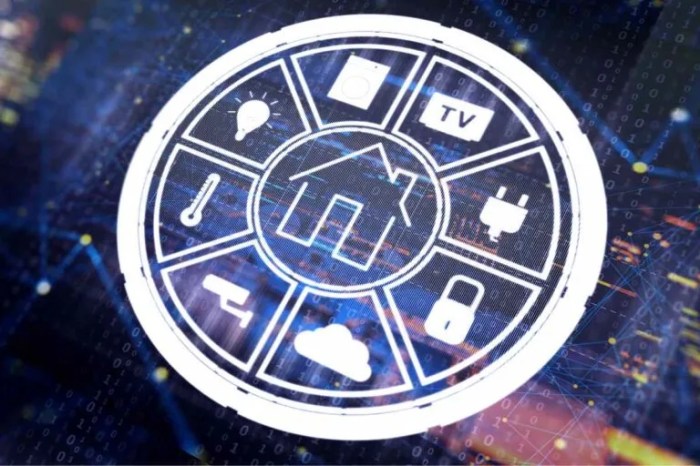
The true power of a smart home lies not just in its technology, but in how it feels to use it. Intuitive user interfaces are crucial; whether through a mobile app, a central hub, or voice commands, controlling your smart home should feel natural and straightforward, not like deciphering a complex manual. This ease of use ensures that the technology enhances, rather than complicates, your life. Personalization settings are where a smart home truly shines, transforming it from a collection of automated devices into a living space that is uniquely yours. By tailoring settings to your specific preferences, your home becomes a sanctuary that actively supports your comfort and well-being.
The ability to create custom “scenes” or routines is a cornerstone of this personalization. These are pre-programmed sequences of actions that activate with a single command or trigger. For instance, a “Morning Routine” might be set to:
“Morning Routine” Scene:
– Lights gradually brighten in the bedroom.
– Smart blinds open to a preset level.
– Thermostat adjusts to the preferred morning temperature.
– Smart speaker plays a curated news briefing or calming music.
– Coffee maker begins brewing.
Similarly, a “Movie Night” scene could dim the lights, close the blinds, turn on the TV and sound system, and set a cozy temperature. As you build these personalized experiences, it’s vital to consider data privacy and security. Understanding how your data is collected, stored, and used is essential. Choosing reputable brands with strong security protocols and implementing robust password practices are key steps in ensuring that your personalized smart home remains a secure and private haven.
Emerging Trends in Smart Home Comfort
The evolution of the smart home is far from over, with exciting innovations on the horizon that promise to redefine comfort. Artificial intelligence and machine learning are poised to play an even larger role, moving beyond simple learning to truly predictive comfort adjustments. Imagine your home anticipating your needs before you even realize them – perhaps adjusting the temperature based on weather forecasts and your usual activity patterns, or subtly altering lighting to improve your mood.
The integration of wellness-focused smart home features is also gaining momentum. This includes systems that monitor air quality and proactively purify it, lighting that mimics natural daylight cycles to improve sleep, and even devices that can track your sleep patterns and offer personalized recommendations for a more restful night. Interoperability standards are becoming increasingly important, aiming to create a more unified smart home ecosystem where devices from different manufacturers can communicate and work together seamlessly. This will reduce compatibility issues and open up even more possibilities for integrated comfort. Finally, the future of smart homes is intrinsically linked to energy efficiency. As technology advances, smart homes will become even better at optimizing energy consumption, not just for cost savings, but also for enhanced comfort. By intelligently managing heating, cooling, and lighting, smart homes will contribute to both personal comfort and a more sustainable planet.
Embrace the ease of Smart Home Lifestyle Trends for Comfortable Living! As we adapt to modern lifestyle trends , integrating smart technology amplifies our daily comfort and efficiency. These innovations truly elevate the smart home experience, making everyday life smoother and more enjoyable.